Fetched Up

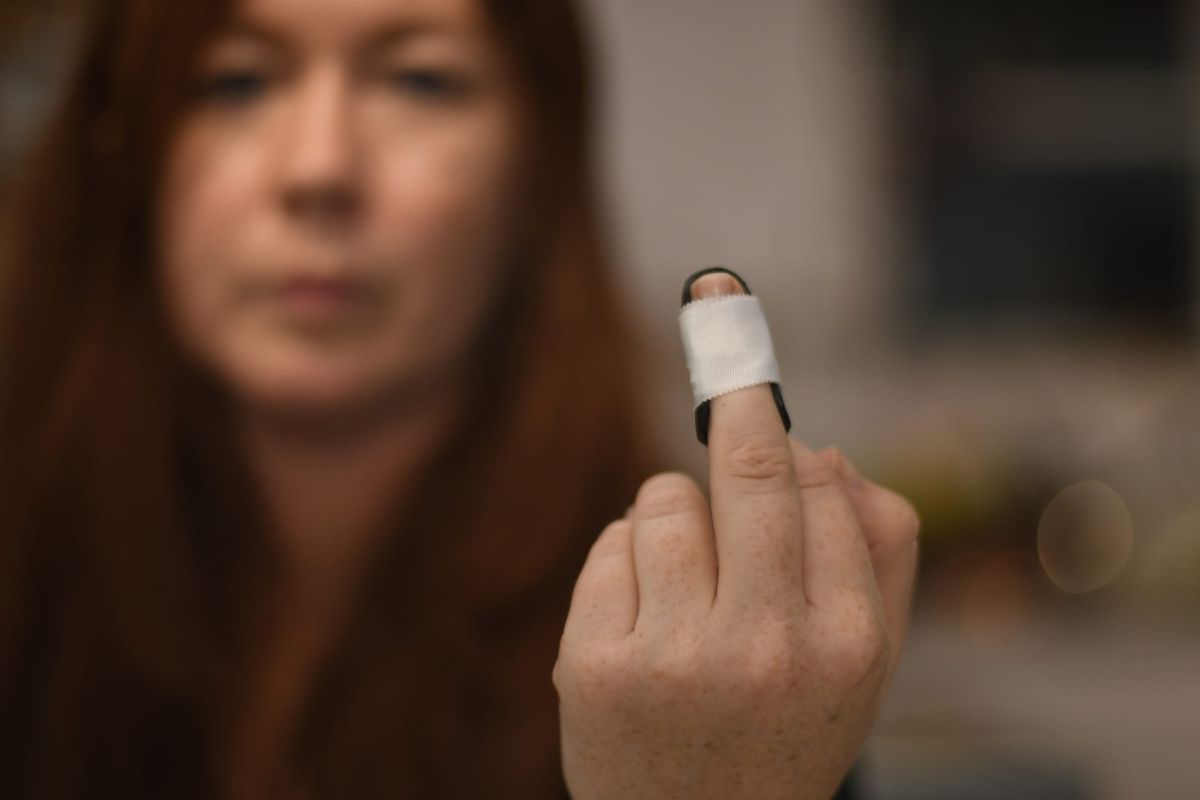
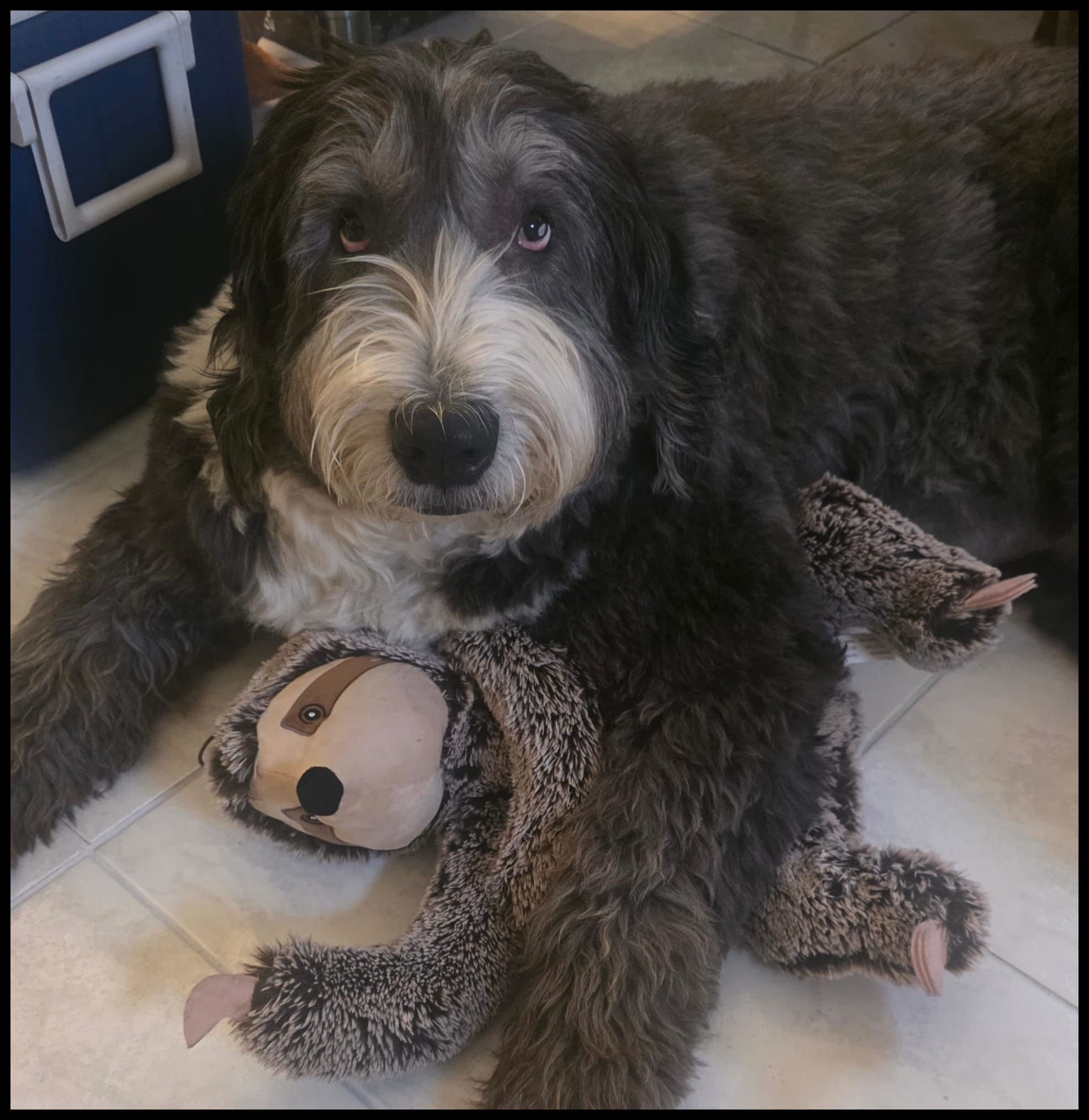
With the power to win a fight or signal a new one, the middle finger is a worthy accomplice. Reserved for traffic altercations, it can dispatch a jumble of helmet swears to the rest of the world in one swift gesture. The simple act takes quiet command of an uneasy situation, rising up while other fingers bend in reverence. Formerly known for its ability to keep people at a distance, flipping someone off has become this year’s conversation starter. When asked how I’m doing these days, I get straight to the point. First, I blame the dog since he’s the one who landed me here in the first place. On a routine walk, his meaty 130-pound body shifted from a leisurely stroll into a prey-driven fantasy chase around the neighbourhood. Cats scattered like a break shot, alarms went off, shrubs were flattened, but before the leash broke free, it lingered long enough to lasso my middle finger and snap the bone sideways into a Westward lean. The title of ‘good boy’ held by Buster for six years straight was revoked in a lapse of judgment, sending us straight back to puppy days.
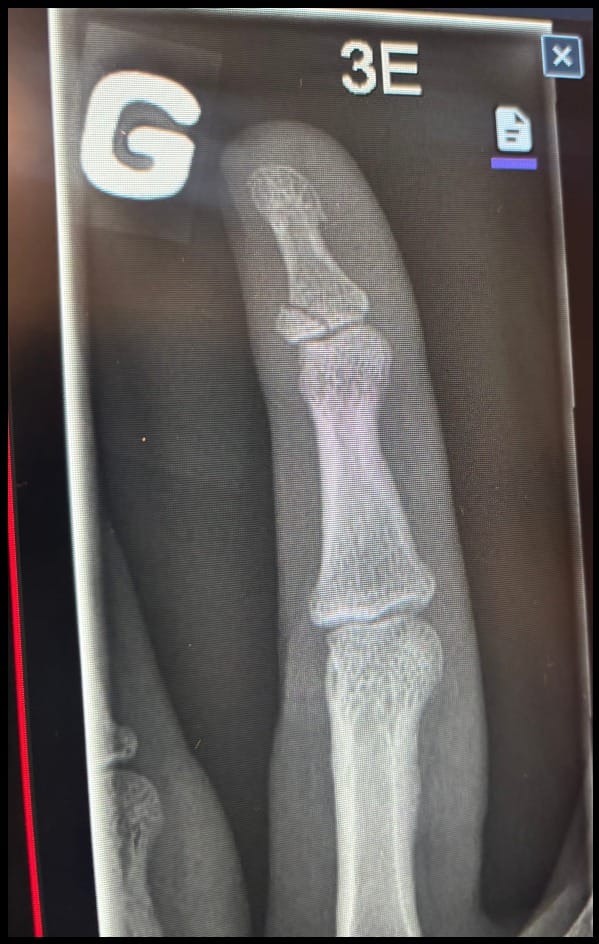
Embarrassed to tell people what caused the damage, I was proud to share that it wasn’t the result of a bike accident. Though we’re made of things that break and bend, I was too stubborn to get help for the awkward-looking finger until everyone, including my dentist, threw just the right amount of shame my way. My period of denial ended when I saw the X-ray, and I emerged shortly after the scan from the hospital with what looked like a plastic toboggan taped to my break. Luckily, people around me pushed for a repair and found the parts I needed to move on, one for my finger and one for my bike. The next stage of my grief was anger.
Back from the hospital, I ran to my bike to perform a test ride, thinking the cast would solve everything, but the broken bone impacted my riding more than I had imagined. Making a fist around the clutch was impossible, and while my fingers bent collectively, the broken one painfully failed to follow suit. I felt as though I’d benched the star player, and the team struggled to get a grip without their lead. Although the cast kept my bone from shifting sideways, it wasn’t able to absorb any impact when pressed. Unable to engage the clutch, I gave up after a few attempts and walked into the house defeated. If it had been my throttle side, I could have rolled through the rest of the season without a care. If you’re unfamiliar with the clutch on an old Airhead (in this case, an R75/6), let me help you understand. Modern bikes make use of a clutch lever that operates on hydraulics, so when you engage it’s slick, like butter rolling over a hot biscuit. A dry clutch, like the one on my vintage bike, requires a harder pull on the lever to see results, imagine squeezing juice from an underripe orange. To get moving again, I had to find a workaround for my weak hand, and with winter around the corner, I couldn’t let the last of a good season slip away. I went straight to the garage to start some head scratching.
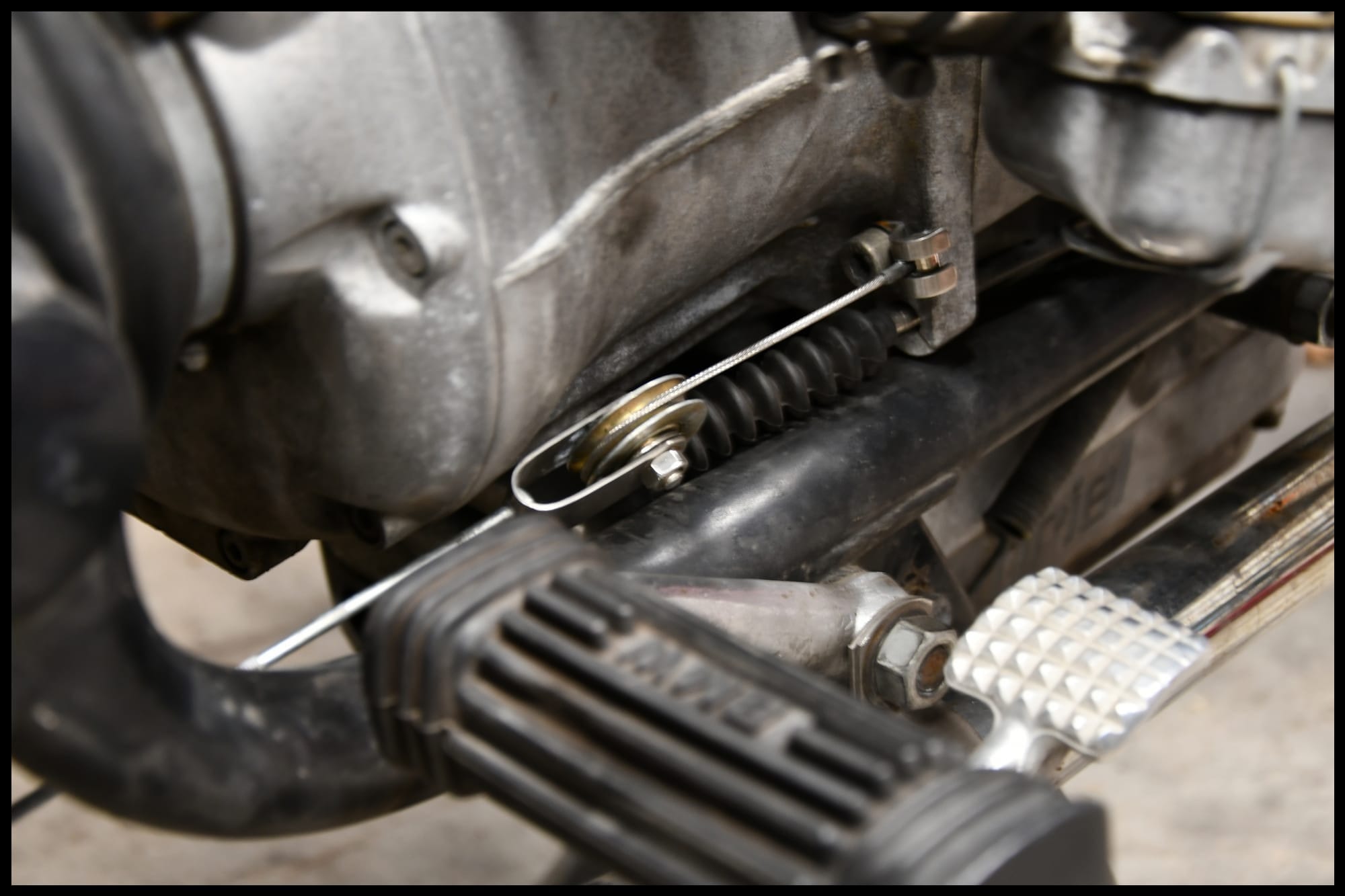
Plucked from a bin full of parts in various stages of usefulness, Tom emerged with a clutch assist system I didn’t know existed. Lying dormant for a few years, it was time to earn its keep and stop loafing around. Designed by Twin Headlight Ernie, the pulley reduces the force needed for the clutch lever to engage, making it easier to pull in. Over a few secretive lunch breaks, the installation was complete, and I was presented with a confident assurance that I could ride again. Testing the results with a rip around the block, I extended the neighbourhood route and haven’t looked back.
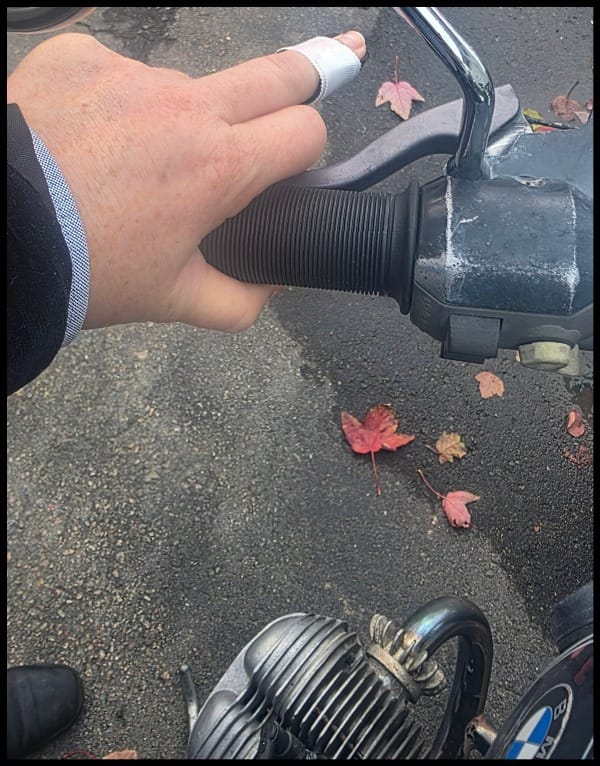
So, how does it compare with the old clutch system? Keep in mind, the insides haven’t changed. My old clutch lever offered a bit of freeplay before it would engage, and this one is so smooth I’m not sure where the freeplay starts and ends. I’d love to tell you it was easy to put on the bike, but since I had nothing to do with the surprise adaptation, I only get to enjoy the magic of the fixed problem. With minimal pressure applied to the clutch lever, I’m able to ride without the full strength of my hand, and since I have to keep the finger elevated, biking is an ideal position to be in. When Spring returns, I’ll go back to stock for reasons that remain purely romantic and will continue using my middle finger for directing traffic.